Is It Acne or an Allergic Reaction? How to Tell the Difference
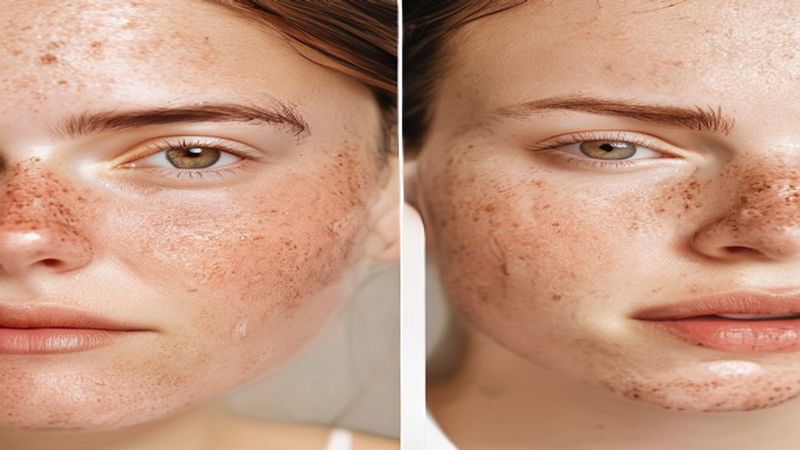
You wake up with a face full of red bumps. Your first instinct is to call it a breakout and reach for your acne treatment. But what if it is not acne at all? Allergic reactions on the face can look remarkably similar to acne, and treating one like the other can make things significantly worse. Applying benzoyl peroxide to allergic contact dermatitis will inflame your skin further, while treating genuine acne with hydrocortisone can trigger perioral dermatitis.
Understanding whether you are dealing with acne or an allergic reaction is essential for choosing the right treatment. This guide breaks down the differences in timing, appearance, location, and management so you can figure out what is actually happening on your skin.
Acne Mechanica vs. Contact Dermatitis: The Two Main Culprits
When a skincare or cosmetic product causes a breakout on your face, two distinct mechanisms may be at work:
Acne cosmetica (comedogenic breakout): This occurs when an ingredient physically clogs your pores. The product sits on the skin, mixes with sebum, and blocks the follicular opening. Over days to weeks, comedones (blackheads and whiteheads) form, and some may progress to inflammatory papules and pustules as bacteria colonize the clogged pore. This is a mechanical, non-immune process — your immune system is not reacting to the ingredient itself, it is reacting to the bacterial overgrowth caused by the pore blockage.
Allergic contact dermatitis (ACD): This is an immune-mediated response where your T-cells recognize a specific ingredient as a foreign invader and mount an inflammatory attack. The result is red, itchy, eczematous patches — often with swelling, scaling, and sometimes vesicles (tiny blisters). ACD is a Type IV delayed hypersensitivity reaction, meaning it takes 24-72 hours to develop after exposure. Common allergens in skincare include fragrance, preservatives, and certain plant extracts.
There is also a third possibility — irritant contact dermatitis — which is a non-immune inflammatory response to a harsh or damaging substance. For a deeper comparison, see our guide on allergy vs. irritation.
Timing Differences: The Most Reliable Clue
Timing is one of the most reliable ways to distinguish acne from an allergic reaction:
- Acne cosmetica develops slowly. Comedogenic breakouts take days to weeks to appear. You start using a new moisturizer, and two to four weeks later, you notice more blackheads and whiteheads than usual. The timeline is gradual because the pore-clogging process is mechanical — sebum and dead skin cells accumulate slowly.
- Allergic contact dermatitis has a 24-72 hour delayed onset. You apply a new serum on Monday evening, and by Wednesday morning, the area is red, swollen, and itchy. This delayed onset is characteristic of Type IV hypersensitivity reactions. In people who are already sensitized to an ingredient, the reaction can appear as early as 12 hours after exposure.
- Irritant reactions are faster still. A true irritant reaction — stinging, burning, immediate redness — can occur within minutes to hours. Unlike ACD, the reaction occurs on first exposure and does not require prior sensitization.
If your "breakout" appeared suddenly and dramatically within 1-3 days of using a new product, an allergic reaction is far more likely than acne. If it crept up slowly over weeks, comedogenic acne is the more probable cause.
What the Lesions Look Like: Papules vs. Vesicles, Comedones vs. Eczematous Patches
The physical appearance of the lesions provides critical diagnostic clues:
Acne Lesions
- Comedones: Open comedones (blackheads) and closed comedones (whiteheads) are the hallmark of acne. If you see small, skin-colored bumps or dark-tipped pores, this is almost certainly acne. Allergic reactions do not produce comedones.
- Inflammatory papules and pustules: Red bumps and pus-filled bumps that arise from comedones. They tend to be discrete, well-defined, and scattered individually rather than in confluent patches.
- No significant itching: Acne can be tender and sore, but intense itching is unusual. If your bumps itch more than they hurt, reconsider whether it is truly acne.
Allergic Reaction Lesions
- Eczematous patches: Red, scaly, poorly defined patches of inflamed skin. Unlike the discrete bumps of acne, ACD often presents as diffuse areas of redness and swelling.
- Vesicles: Tiny fluid-filled blisters are a classic sign of acute allergic contact dermatitis. Acne does not produce vesicles (though pustules can look similar — the key difference is that vesicles contain clear fluid while pustules contain pus).
- Intense itching: The hallmark of ACD is itch. Allergic reactions itch intensely. If the dominant sensation is itching rather than tenderness, suspect ACD over acne.
- Swelling and edema: ACD can cause noticeable facial swelling, especially around the eyes and lips where the skin is thin. Acne does not cause generalized swelling.
Location Patterns: Where on Your Face Matters
The distribution of the breakout on your face provides important clues about the cause:
- Hormonal acne: Concentrated on the jawline, chin, and lower cheeks. This pattern reflects the density of androgen-sensitive sebaceous glands in the lower face.
- Acne cosmetica: Matches the application area of the offending product. Forehead breakouts from hair products, cheek breakouts from foundation, perioral breakouts from lip products.
- Allergic contact dermatitis: Also matches the application area, but with a key difference — ACD can "spread" slightly beyond the application zone as the immune response extends into surrounding tissue. ACD from airborne allergens (like fragrance diffusers) can affect the entire face, especially the eyelids.
- Eyelid involvement: If your eyelids are affected, it is almost never acne. Eyelid dermatitis is typically allergic or irritant contact dermatitis. The eyelids are the thinnest skin on the face and are highly susceptible to contact allergens — including allergens transferred from fingertips and products applied elsewhere.
An asymmetric distribution can also help. If the breakout is only on the side of your face where you hold your phone, or only on the cheek you sleep on, the cause is likely mechanical (acne mechanica) rather than allergic.
When Products Cause Both: The Comedogenic-Allergenic Double Hit
Here is where things get complicated: some products can cause acne AND an allergic reaction simultaneously. This happens when a product contains both comedogenic ingredients (that clog pores) and allergenic ingredients (that trigger an immune response).
Common examples:
- Coconut oil-based products with fragrance: Coconut oil has a comedogenic rating of 4 out of 5, and fragrance is the most common cosmetic allergen. A coconut oil moisturizer with added fragrance can cause comedonal acne from the oil and ACD from the fragrance at the same time.
- Rich foundations with preservatives: Heavy liquid foundations may clog pores while preservatives like MI or formaldehyde releasers trigger sensitization.
- Hair products that contact facial skin: Pomades and styling products may contain both comedogenic waxes and allergenic fragrances, causing "pomade acne" along the hairline with eczematous patches where the product drips.
The mixed presentation — comedones alongside itchy red patches — is actually a strong clue that the product is the problem, because hormonal or bacterial acne does not present with eczematous features.
Treatment Differences: Why Getting the Diagnosis Right Matters
Treating acne like an allergy or vice versa is not just ineffective — it can make the condition worse:
Treating Acne
- Benzoyl peroxide (2.5-10%): Kills acne-causing bacteria (C. acnes) and is a first-line OTC treatment for inflammatory acne.
- Salicylic acid (0.5-2%): A beta-hydroxy acid that exfoliates inside the pore, clearing comedones and preventing new ones from forming.
- Retinoids (adapalene, tretinoin): Increase cell turnover, prevent comedone formation, and are the gold standard for comedonal acne.
- Non-comedogenic products: Switch to products with a comedogenic rating of 0-1 and avoid known pore-clogging ingredients.
Treating Allergic Contact Dermatitis
- Allergen avoidance: Identify and stop using the offending product immediately. Use SkinDetekt's ingredient checker to cross-reference your products and find the common allergenic ingredient.
- Topical corticosteroids: A short course (5-14 days) of a mid-potency topical steroid prescribed by a dermatologist can speed resolution of moderate-to-severe ACD. Do NOT use steroids for acne.
- Barrier repair: A fragrance-free, minimal-ingredient moisturizer to support the damaged skin barrier. Look for ceramides, hyaluronic acid, and petrolatum.
- Cool compresses: For immediate relief of itching and swelling.
Notice the critical difference: benzoyl peroxide and salicylic acid — excellent for acne — will further irritate and inflame allergic contact dermatitis. Topical corticosteroids — appropriate for ACD — can worsen acne and trigger perioral dermatitis. Getting the diagnosis right determines the entire treatment approach.
When to See a Dermatologist
See a dermatologist if:
- You cannot determine whether your breakout is acne or an allergic reaction based on the criteria above
- The reaction is severe — widespread swelling, blistering, or involvement of the eyes
- OTC acne treatments have not improved your breakout after 6-8 weeks of consistent use
- You suspect an allergic reaction but cannot identify the triggering product or ingredient
- You have a mixed presentation (comedones plus eczematous patches) and need help sorting out the contributing factors
- Reactions keep recurring despite switching products
A dermatologist can perform professional patch testing to definitively identify your contact allergens, and can prescribe targeted treatment that addresses both conditions if they are occurring simultaneously.
Not sure what is causing your breakout? Start by scanning your current products with SkinDetekt's free ingredient checker. It flags both known allergens and comedogenic ingredients, helping you narrow down the likely culprit. Compare products side by side to find safer alternatives, and explore our ingredient database to learn about specific substances that may be triggering your skin.
Frequently Asked Questions
How can I tell if my breakout is acne or an allergic reaction?
The key differences are timing, lesion type, and associated symptoms. Acne develops slowly over days to weeks with comedones (blackheads and whiteheads), papules, and pustules. Allergic reactions typically appear within 24-72 hours of exposure, present as red, itchy, eczematous patches — sometimes with vesicles (tiny fluid-filled blisters) — and do not involve comedones. If your breakout itches intensely and appeared suddenly after using a new product, it is more likely an allergic reaction. If it developed gradually with blackheads and whiteheads, it is more likely acne.
Can a skincare product cause both acne and an allergic reaction at the same time?
Yes. A product can be both comedogenic (pore-clogging) and allergenic simultaneously. For example, a moisturizer containing coconut oil (highly comedogenic) and fragrance (a common allergen) could cause comedonal acne from the oil while also triggering allergic contact dermatitis from the fragrance. When both occur together, you may see a mixed presentation — comedones alongside itchy, red, eczematous patches. This dual reaction is one reason why switching to a single new product at a time is so important.
Why does my face break out only where I apply a specific product?
Location-specific breakouts strongly suggest a product-related cause rather than hormonal or systemic acne. If the breakout follows the exact application pattern of a product — for example, cheeks where you apply blush, or the forehead where a hair product drips — you are likely dealing with either acne cosmetica (comedogenic breakout from the product) or allergic contact dermatitis. True hormonal acne follows predictable patterns: jawline, chin, and lower cheeks, and is not limited to product application areas.
Should I use benzoyl peroxide on an allergic reaction?
No. Benzoyl peroxide is an acne treatment that works by killing acne-causing bacteria and reducing inflammation in clogged pores. It is not effective for allergic contact dermatitis and can actually worsen an allergic reaction by further irritating already-inflamed skin. If your breakout is an allergic reaction, the correct approach is to stop the offending product, apply a fragrance-free barrier repair moisturizer, and see a dermatologist if the reaction is severe. A short course of topical corticosteroid may be prescribed for confirmed allergic contact dermatitis.
How long does an allergic reaction on the face take to clear up?
With proper treatment (allergen avoidance and, if needed, a short course of topical corticosteroid), most allergic contact dermatitis on the face resolves within 1-3 weeks. Mild reactions may clear in 5-7 days with just allergen avoidance. Severe reactions with vesicles or widespread involvement can take 3-4 weeks. Acne breakouts, by contrast, follow a different timeline — individual pimples last 5-10 days, but acne as a condition persists until the underlying cause (excess sebum, bacteria, comedogenic products) is addressed.
Find your personal cosmetic triggers
SkinDetekt tracks your products and reactions, then uses AI to identify which ingredients cause YOUR skin reactions.
Download on App Store