What Is Patch Testing for Cosmetics? A Complete Guide
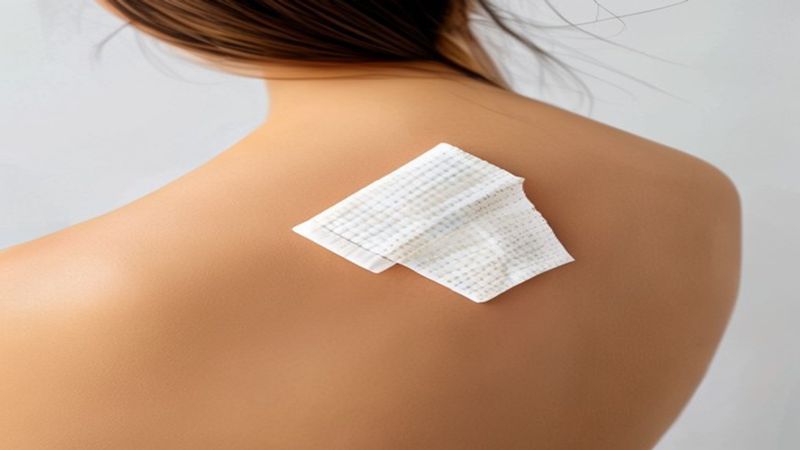
If you've been struggling with unexplained skin rashes, itching, or eczema that flares up after using certain cosmetics or skincare products, your dermatologist may recommend a patch test. Patch testing is the gold standard diagnostic tool for identifying the specific ingredients causing allergic contact dermatitis — and it's very different from the "patch test" suggested on the back of product packaging.
This guide covers everything you need to know about professional patch testing: what it is, who needs it, how the procedure works day by day, how to read your results, and what to do once you know your triggers. We also cover how to perform a simplified DIY test at home for screening individual products.
What Is Patch Testing and Why Does It Matter?
Patch testing (also called epicutaneous testing or diagnostic patch testing) is a clinical procedure performed by dermatologists to determine which specific chemical substances cause allergic contact dermatitis (ACD) in a patient. Unlike skin prick testing used for food and environmental allergies, patch testing evaluates delayed-type (Type IV) hypersensitivity reactions — the kind that cause rashes 24-96 hours after exposure.
Allergic contact dermatitis affects an estimated 15-20% of the general population at some point in their lives, according to data published in the Journal of the American Academy of Dermatology. Yet most people who experience cosmetic-related skin reactions never identify the specific ingredient responsible. They simply discard the product and try something new — often encountering the same allergen again because it appears under different names across different products.
Patch testing changes this cycle by pinpointing the exact allergens you need to avoid. Once you know your triggers, you can systematically screen every product before purchasing it. Tools like SkinDetekt's ingredient checker make this process fast and simple by cross-referencing your known allergens against full ingredient lists.
Who Should Get a Patch Test?
The American Contact Dermatitis Society recommends patch testing for anyone with suspected allergic contact dermatitis that has not responded to standard treatment. Specifically, you should consider patch testing if:
- You have chronic or recurring eczema that does not respond well to topical corticosteroids or that returns quickly after treatment stops.
- Your dermatitis affects specific body sites — eyelids, face, hands, or areas that come into direct contact with cosmetic products are classic patterns for ACD.
- You notice a pattern where your skin reacts after using certain types of products, but you cannot pinpoint which ingredient is the culprit.
- You have occupational skin disease — hairdressers, healthcare workers, cleaning staff, and others with frequent chemical exposure are at higher risk for developing ACD.
- You have already tried elimination approaches (like those described in our guide to finding your skin allergy trigger) without success.
Patch testing is safe for most adults and older children. It is generally avoided in pregnant women (due to theoretical concerns about immune modulation) and in patients with widespread active dermatitis on the back (the test area), as inflamed skin can produce false-positive results.
How Patch Testing Works: A Day-by-Day Breakdown
Professional patch testing follows a standardized protocol developed by the International Contact Dermatitis Research Group (ICDRG). Here is what to expect:
Day 1 — Application
Your dermatologist applies small aluminum or plastic chambers (Finn Chambers or IQ Ultra chambers), each containing a tiny amount of a single allergen in a standardized concentration, to your upper back. These chambers are secured with hypoallergenic tape. A standard series typically includes 35-80 allergens; specialized panels can test 100+ substances.
Each chamber is numbered and mapped to a grid so results can be precisely recorded. The allergens are prepared in specific vehicles (typically petrolatum or water) at concentrations determined by decades of clinical research to be sufficient to trigger a reaction in sensitized individuals without causing irritation in non-sensitized people.
Important instructions for Day 1: You must keep the patches dry — no showering, bathing, or heavy exercise that causes sweating. Avoid lying directly on your back for extended periods. Do not apply any products to your back.
Day 2 — First Reading (48 Hours)
After 48 hours, you return to the clinic. The patches are carefully removed and the dermatologist marks each test site with a surgical marker or fluorescent pen. After a 20-30 minute waiting period (to allow any pressure-related redness from the tape to subside), the first reading is performed.
The dermatologist examines each test site and grades the reaction according to the ICDRG scale (see results interpretation section below). All findings are recorded in your medical chart.
Day 3 or Day 4 — Final Reading (72-96 Hours)
You return for a second and final reading. This delayed reading is critical because some allergic reactions — particularly to certain metals like nickel sulfate and some fragrance compounds — may only become visible at 72-96 hours. Studies have shown that approximately 30% of positive reactions are missed if only a single 48-hour reading is performed.
The final reading follows the same grading protocol. Reactions that were negative or doubtful at Day 2 but positive at Day 3/4 are called "crescendo reactions" and are strong evidence of true allergy.
Standard Series vs. Extended Panels
Not all patch tests are created equal. The scope of testing depends on your clinical history and the allergens your dermatologist suspects.
Standard (Baseline) Series
The standard series is the foundation of patch testing. The two most widely used baseline series are:
- T.R.U.E. Test (Thin-layer Rapid Use Epicutaneous Test): An FDA-approved, pre-loaded patch test system containing 35 allergens plus a negative control. It is convenient and widely available but has a limited allergen panel.
- North American Contact Dermatitis Group (NACDG) series: A more comprehensive series of approximately 65-80 allergens that covers a broader range of common sensitizers, including many cosmetic-relevant chemicals.
The standard series covers the most common cosmetic allergens including methylisothiazolinone, fragrance mix I and II, p-phenylenediamine, formaldehyde, and cocamidopropyl betaine.
Extended and Specialized Panels
If the standard series does not identify a relevant allergen, your dermatologist may add specialized panels:
- Cosmetic/Skincare series: Additional preservatives, emulsifiers, antioxidants, and UV filters specific to skincare and makeup products.
- Hairdressing series: PPD, hair dye intermediates, persulfates, and other salon-specific chemicals.
- Fragrance series: An expanded panel of individual fragrance compounds beyond the standard fragrance mixes.
- Personal product testing: Your dermatologist can also test your own products "as is" — this is useful when the standard panels come back negative but you clearly react to a specific product.
How to Interpret Patch Test Results
Patch test results are graded using the standardized ICDRG scoring system. Understanding these grades helps you have a productive discussion with your dermatologist:
- Negative (−): No reaction. The skin at the test site appears normal.
- Doubtful / Irritant Reaction (?+ or IR): Faint redness only, no infiltration (swelling). This may be a mild irritant response rather than a true allergy. Irritant reactions (IR) are characterized by sharply demarcated, glazed, or "burnt" looking redness that often fades quickly — distinct from true allergic responses.
- Weak Positive (+): Redness with slight infiltration (the skin feels slightly raised or thickened). Small papules (bumps) may be visible. This indicates mild sensitization.
- Strong Positive (++): Redness, infiltration, and papules with vesicles (tiny fluid-filled blisters). This indicates definite allergy.
- Extreme Positive (+++): Intense redness, infiltration, and coalescing vesicles or bullae (large blisters). This indicates strong sensitization.
A critical distinction your dermatologist will make is between allergic reactions and irritant reactions (IR). Allergic reactions tend to grow stronger from the 48-hour to 96-hour reading (crescendo pattern), while irritant reactions tend to peak early and then fade (decrescendo pattern). This is another reason why two readings are essential.
Not every positive result is clinically relevant. Your dermatologist will assess whether each positive allergen is consistent with your dermatitis pattern, exposure history, and product use. For more context on distinguishing allergy from irritation, see our contact dermatitis guide.
What to Do With Your Patch Test Results
Once you have your patch test results, the real work begins: translating those identified allergens into a practical avoidance strategy. Here is a systematic approach:
- Get a written report listing every positive allergen, including its INCI (cosmetic ingredient) name, common name, and any cross-reactors.
- Learn the alternative names — many allergens appear under multiple INCI names. For example, formaldehyde releasers include DMDM hydantoin, imidazolidinyl urea, diazolidinyl urea, quaternium-15, and bronopol — all different names for ingredients that release the same allergen.
- Audit your current products by checking every ingredient list against your identified allergens. SkinDetekt's ingredient checker can automate this process instantly.
- Replace offending products one at a time so you can monitor your skin's response to each new product.
- Check non-cosmetic sources — some allergens appear in household cleaning products, laundry detergents, topical medications, and even food items.
Many dermatology clinics now provide access to databases like the Contact Allergen Management Program (CAMP) or the Contact Allergen Replacement Database (CARD), which generate "safe product" lists based on your specific allergens.
DIY Patch Testing at Home: The ROAT Test
While professional patch testing is the gold standard, there is a clinically validated at-home method you can use to screen individual products: the Repeated Open Application Test (ROAT).
The ROAT test was originally described in dermatological literature in the 1980s and has been validated in multiple clinical studies as a practical method for confirming relevance of patch test results and for screening new products before full-face application.
How to Perform a ROAT Test
- Choose a test area: The inner forearm (volar forearm) is ideal — it is relatively sensitive, easy to observe, and inconspicuous.
- Apply a small amount of the product to a coin-sized area (approximately 5 cm x 5 cm) on the inner forearm.
- Let it absorb naturally — do not cover it with a bandage or occlusive dressing.
- Repeat the application twice daily (morning and evening) to the same area for up to 14 days.
- Observe for any reaction: Redness, itching, bumps, dryness, or swelling at the application site indicates a positive reaction. Stop the test immediately if a reaction develops.
- If no reaction occurs after 14 days, the product is likely safe for you to use.
Limitations of the ROAT test: It can only tell you whether you react to a complete product — not which specific ingredient in that product is the trigger. If the ROAT is positive, you know to avoid that product, but you don't know which of its 20-40 ingredients is the problem. You would need professional patch testing with individual allergens to make that determination.
The ROAT test is most useful for: screening new products before committing to them, confirming that a replacement product is safe after you've identified your allergens, and validating questionable patch test results.
Cost, Insurance, and Limitations of Patch Testing
Professional patch testing is a medical procedure that involves multiple office visits and specialized materials. Here is what to expect financially:
- Cost without insurance: $150-$600 in the US, depending on the scope of testing and your location. Academic medical centers may charge more but often offer more comprehensive panels.
- Insurance coverage: Most health insurance plans cover patch testing when there is a documented clinical indication (persistent dermatitis, suspected ACD). The T.R.U.E. Test is most commonly covered as it is FDA-approved. Extended panels may require prior authorization.
- Time commitment: Three office visits over 4-5 days, plus restrictions on showering and physical activity during the testing period.
Known Limitations
Patch testing is highly valuable but not perfect. Be aware of these limitations:
- False negatives: A negative result does not guarantee you are not allergic — the specific allergen may not have been included in the panel tested, or the test concentration may have been insufficient.
- False positives: Irritant reactions can mimic allergic reactions, especially at the 48-hour reading. This is why the delayed reading and expert interpretation are essential.
- Cannot test everything: There are thousands of cosmetic ingredients. Even comprehensive panels test only a few hundred. If your allergen is rare or proprietary, it may be missed.
- Snapshot in time: Patch testing reflects your sensitization status at the time of testing. New sensitizations can develop later, particularly if you are exposed to potent sensitizers.
Despite these limitations, patch testing remains by far the most reliable method for diagnosing allergic contact dermatitis. When combined with a thorough clinical history and product use analysis, it identifies the relevant allergen in the majority of cases.
Ready to start understanding what's in your cosmetic products? Use SkinDetekt's free ingredient checker to screen any product's ingredient list for known allergens, or explore our guide to finding your skin allergy trigger for a step-by-step elimination approach. Whether you're preparing for a patch test or following up on your results, SkinDetekt helps you translate allergen knowledge into safe product choices.
Frequently Asked Questions
How long does a patch test take?
A professional patch test takes 4-5 days from start to finish. On Day 1, allergen patches are applied to your upper back. On Day 2 (48 hours later), the patches are removed and the first reading is done. A final reading is performed on Day 3 or Day 4 (72-96 hours after application). Some reactions only appear at the later reading, which is why two separate reading appointments are essential for accurate diagnosis.
Does patch testing hurt?
Patch testing is generally painless. The patches are secured to your back with hypoallergenic tape and feel similar to wearing adhesive bandages. If you have a positive reaction to an allergen, you may experience localized itching, redness, or mild discomfort at that specific test site. Your dermatologist can provide relief if a reaction is particularly bothersome. The most common complaint is the inconvenience of keeping the patches dry for 48 hours.
How much does patch testing cost?
In the United States, professional patch testing typically costs between $150 and $600 depending on the number of allergens tested and your geographic location. Many health insurance plans cover patch testing when it is medically indicated for suspected allergic contact dermatitis. The standard series (approximately 35-80 allergens) is usually covered, while extended or specialized panels may require prior authorization. Contact your insurance provider before your appointment to confirm coverage.
Can I do a patch test at home?
You can do a simplified test at home called the Repeated Open Application Test (ROAT). Apply a small amount of the product you suspect to the inner forearm twice daily for 7-14 days. If redness, itching, or bumps develop at the application site, you are likely reacting to something in the product. However, a home test cannot identify which specific ingredient is the trigger — only a professional patch test with individual allergens can do that.
Should I stop using my medications before a patch test?
You should avoid oral corticosteroids (like prednisone) and immunosuppressants for at least one week before testing, as they can suppress allergic reactions and produce false-negative results. Topical corticosteroids should not be applied to the test area (upper back) for at least one week prior. Antihistamines generally do not affect patch test results and can usually be continued. Always discuss your current medications with your dermatologist before scheduling patch testing.
Find your personal cosmetic triggers
SkinDetekt tracks your products and reactions, then uses AI to identify which ingredients cause YOUR skin reactions.
Download on App StoreRelated Articles
Histamine Intolerance and Skin Reactions: Can Your Skincare Make It Worse?
12 min read
Latex Allergy and Cosmetics: Hidden Sources and Safe Alternatives
10 min read
Nickel Allergy in Makeup and Jewelry: Symptoms, Hidden Sources & Safe Products
11 min read
How to Repair a Damaged Skin Barrier: Signs, Causes & Recovery
12 min read