Why Is My Hyaluronic Acid Not Working? The Application Mistakes Ruining Its Effect
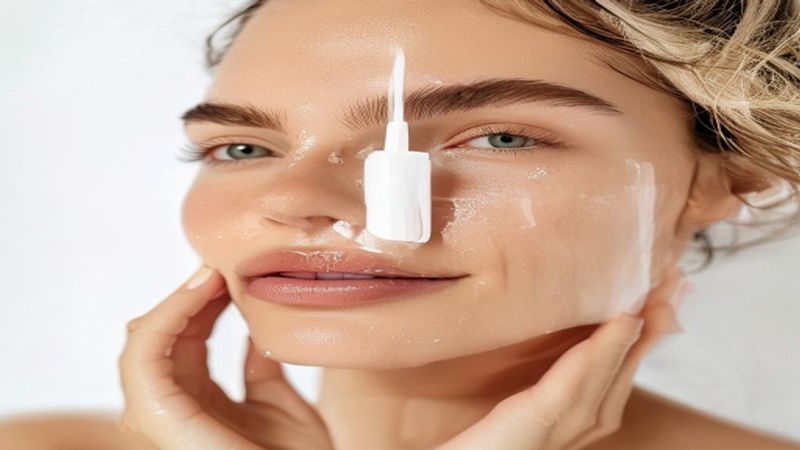
Hyaluronic acid stops working — or makes skin drier — when it is applied to dry skin in low-humidity environments without being sealed with a moisturizer or occlusive. Hyaluronic acid is a humectant: it draws moisture toward itself from wherever moisture is available. In dry air (below ~40% humidity), it pulls water from deeper skin layers toward the surface and allows it to evaporate, leaving skin drier than before. The fix is applying hyaluronic acid to damp skin and immediately sealing it with a cream or oil.
How Hyaluronic Acid Actually Works
Hyaluronic acid (HA) is a glycosaminoglycan — a long-chain sugar molecule — that is naturally present in skin, connective tissue, and the eyes. Its defining property is its extraordinary capacity to bind water: a single gram of HA can hold up to six liters of water. In the skin, HA in the dermis provides structural support and maintains tissue hydration.
As a topical ingredient, HA functions as a humectant. Humectants attract water molecules and draw them toward themselves. In ideal conditions — humid environment, damp skin — topical HA pulls environmental moisture and surface water into the upper layers of the stratum corneum, creating a visible plumping and smoothing effect. The problem is that this mechanism is entirely dependent on the availability of water from somewhere, and "somewhere" is not always the right place.
The Humidity Problem: Why HA Fails in Dry Climates
Several studies and a large body of cosmetic chemistry consensus have established that humectants including hyaluronic acid perform differently depending on ambient relative humidity (RH). At RH above ~60%, HA primarily draws moisture from the environment, making it genuinely beneficial. At RH below ~40% — typical of heated indoor spaces in winter, air-conditioned offices, and arid climates — there is not enough environmental moisture for HA to draw from. Instead, it draws water from deeper skin layers (the viable epidermis and upper dermis) up toward the surface, where it evaporates into the dry air.
This is not a flaw in the product — it is a fundamental property of all humectants used in isolation. The solution is sealing: applying a moisturizer or occlusive on top of the HA layer creates a physical barrier that prevents that surface water from evaporating. Without that seal, HA in dry conditions is counterproductive. If you are also experiencing barrier-related issues alongside dry skin, glycerin — discussed in our guide to glycerin in skincare — is a more forgiving alternative in variable humidity conditions.
The 3 HA Mistakes That Make It Backfire
Mistake 1: Applying to dry skin. Applying HA to completely dry skin removes the surface moisture layer that HA needs to work with. The result is that HA immediately begins drawing from deeper layers. Apply within 60 seconds of rinsing your face while skin is still slightly damp.
Mistake 2: Skipping the occlusive or moisturizer. HA applied and left unsealed — as the final step in a routine — is especially problematic in dry environments. Always follow HA with a moisturizer (minimum) or a moisturizer plus a light occlusive. Even a few drops of squalane oil on top of your moisturizer significantly reduces TEWL and allows the HA to function as intended.
Mistake 3: Using the wrong molecular weight. Some low-molecular-weight HA products marketed as "deeper penetrating" can cause tingling or sensitivity in people with compromised barriers, while high-molecular-weight HA that only films on the surface may feel insufficient for chronically dehydrated skin. Understanding which weight you are using — and what it can realistically do — matters. See the FAQ section below for a breakdown.
Low vs High Molecular Weight HA Explained
Cosmetic hyaluronic acid comes in several molecular weights, and these are not interchangeable:
High molecular weight HA (1,000–1,800 kDa): Forms a hydrating film on the skin surface. Provides immediate visible plumping, reduces surface TEWL, and is unlikely to penetrate or cause any irritation. Best for surface-level dehydration and visible smoothing.
Medium molecular weight HA (100–1,000 kDa): Partially penetrates the upper stratum corneum. Provides both surface and some sub-surface hydration.
Low molecular weight / hydrolyzed HA (below 50 kDa): Can penetrate further into the epidermis. Some research suggests it may provoke mild inflammatory signaling in certain skin types and can feel irritating on sensitive or damaged skin. More effective for long-term dermal hydration but not universally better for all skin types.
Products that list "sodium hyaluronate" are using the salt form of HA, which is slightly smaller and more stable than pure hyaluronic acid and penetrates marginally better at equivalent molecular weights.
Polyglutamic Acid: A Better Alternative in Dry Climates
Polyglutamic acid (PGA) is a fermentation-derived humectant that has gained significant attention in recent years. Studies have shown PGA can hold four times more moisture than hyaluronic acid by weight, and — crucially — its performance degrades less in low-humidity conditions compared to HA. PGA also inhibits the enzyme hyaluronidase, which breaks down the skin's own natural HA, meaning it helps preserve existing skin HA as well as providing its own humectant effect.
If you live in a climate with consistently low humidity and have repeatedly found HA unsatisfying, PGA is worth trialing as a replacement. It is increasingly available in serums from both Korean and Western skincare brands.
Sodium PCA vs Hyaluronic Acid
Sodium PCA (sodium pyrrolidone carboxylic acid) is a component of the skin's own natural moisturizing factor (NMF) — the collection of hygroscopic molecules in the stratum corneum responsible for intrinsic hydration. Unlike HA, sodium PCA is naturally present in skin at meaningful concentrations, and its levels deplete with age and over-washing. Topical sodium PCA replenishes this NMF component directly and shows strong hydration performance across humidity ranges. For most people comparing HA to sodium PCA in a head-to-head, sodium PCA delivers more consistent results — though both are safe and beneficial. If you have concerns about ingredient safety or sensitivity, our post on hyaluronic acid and sensitive skin covers tolerability in detail.
The Right Layering Order for HA
The sequence is: cleanser → toner (optional) → HA serum (on damp skin) → moisturizer → SPF (morning) or occlusive (night). Do not apply HA after your moisturizer, as this defeats its purpose. Do not mix HA into your moisturizer directly — the pH, formulation stability, and delivery mechanism of each product are designed separately, and mixing can reduce the effectiveness of both.
If you are using a moisturizer that already contains HA, the formulation has been optimized for that combination — but make sure you are still applying it to damp skin and that the product contains film-forming or occlusive ingredients (like glycerin, shea butter, or petrolatum) to prevent the TEWL problem.
How to Tell If Your HA Is Actually Working
When HA is working correctly, skin should feel noticeably plumper and more comfortable within 10–15 minutes of application. Fine lines should appear temporarily softened. The effect should last several hours if properly sealed. If your skin feels tighter after the HA absorbs, or if you feel a mild stinging after application, these are signs that the product is not delivering its intended benefit — either due to the humidity issue, a compromised barrier, or an ingredient in the formula that is not well-tolerated. Use the SkinDetekt checker to review your HA product's full ingredient list if you suspect a formulation issue. Also see our guide on moisturizer allergies if you are reacting to what should be a straightforward hydrating product.
Frequently Asked Questions
Why does hyaluronic acid make my skin dry?
Hyaluronic acid is a humectant that draws moisture toward itself from wherever moisture is available. When applied to dry skin in a low-humidity environment (below about 40% relative humidity), it pulls water from deeper skin layers up toward the surface — and that water then evaporates into the dry air rather than staying in the skin. The result is net water loss, leaving skin drier than before application. The fix is applying HA to damp skin and immediately sealing it with a moisturizing cream or occlusive to trap the moisture in place.
Should I apply hyaluronic acid to wet or dry skin?
Damp skin — not soaking wet, not fully dry. The ideal application window is within 60 seconds of rinsing your face, while the skin still has a slight surface moisture. This gives the HA molecules something to work with at the skin surface while you apply it. Immediately follow with a moisturizer to seal everything in. Applying to bone-dry skin in any climate makes HA less effective; in low-humidity environments it actively backfires.
Does molecular weight of hyaluronic acid matter?
Yes, significantly. High molecular weight HA (above 1,000 kDa) sits on the skin surface, forms a hydrating film, and reduces TEWL — but does not penetrate. Low molecular weight HA (below 50 kDa, sometimes labeled "nano hyaluronic acid") penetrates into the upper dermis and hydrates more deeply. Hydrolyzed hyaluronic acid falls in between. Products with multiple molecular weights provide both surface and deeper hydration. For most people, a high molecular weight HA is sufficient for surface plumping, but chronically dehydrated skin benefits from a multi-weight formula.
What can I use instead of hyaluronic acid if it dries out my skin?
Glycerin is more reliably effective for most people — it is a smaller molecule, a stronger humectant by some measures, and less dependent on ambient humidity. Sodium PCA is another excellent alternative; it is a natural moisturizing factor (NMF) component already found in skin and is exceptionally effective at drawing and retaining moisture. Polyglutamic acid (PGA) is a newer humectant that holds up to four times more moisture than HA and has shown better performance in low-humidity conditions in several studies.
What is the correct order to apply hyaluronic acid in a skincare routine?
Apply hyaluronic acid after cleansing and toning (if you use toner), before moisturizer. The general rule is lightest to heaviest consistency. Serum → moisturizer → SPF (morning) or serum → moisturizer → occlusive (night). Do not mix HA into your moisturizer or apply it after a heavy cream — it needs to contact the skin surface to draw moisture in before being sealed.
Find your personal cosmetic triggers
SkinDetekt tracks your products and reactions, then uses AI to identify which ingredients cause YOUR skin reactions.
Download on App Store