Nickel Allergy in Makeup and Jewelry: Symptoms, Hidden Sources & Safe Products
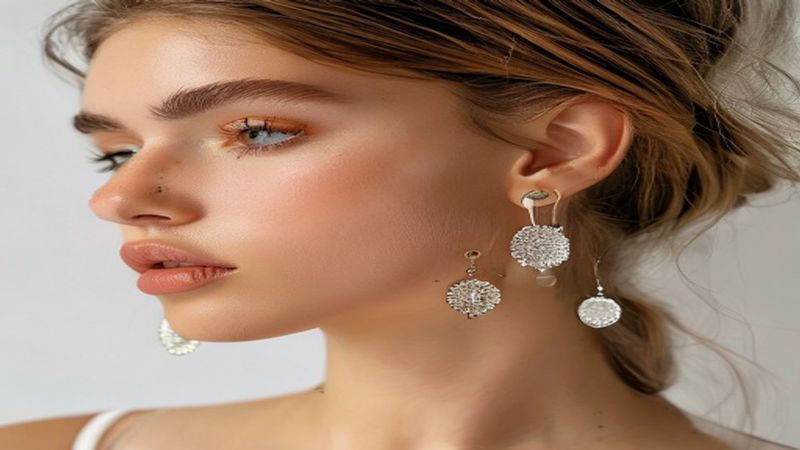
Nickel allergy is the most common metal contact allergy in the world — and it does not stop at jewelry. Nickel appears in makeup pigments, eyeshadow, mascara components, cosmetic tools, and even some skincare ingredients, making it a persistent and often-overlooked trigger for people who react to certain beauty products without understanding why. If you have known nickel sensitivity from jewelry reactions and also experience unexplained eye makeup or foundation reactions, the connection may be nickel.
Why Nickel Is So Common in Jewelry and Tools
Nickel is inexpensive, durable, and improves the hardness and corrosion resistance of metal alloys. It is a standard component of stainless steel, white gold, costume jewelry, and many metal alloys used in everyday objects. The problem is that nickel ions leach from the metal surface when in contact with sweat and moisture — even from high-quality alloys — and these ions are potent sensitizers.
Sensitization typically happens through pierced skin: the combination of metal ion release, minor tissue disruption from the piercing, and prolonged contact creates optimal conditions for the immune system to develop memory T-cells specific to nickel. After sensitization, even brief skin contact with nickel-releasing metals in cosmetic tools, jewelry clasps, and watch backs can trigger the delayed hypersensitivity reaction.
The EU's REACH regulation established nickel release limits for products in prolonged skin contact, which measurably reduced new sensitization rates in European populations. The US has no equivalent federal standard, meaning US-purchased costume jewelry carries greater variability in nickel content.
Nickel in Cosmetics: Where It Hides
Metallic / glitter eyeshadow
High iron oxide + mica with nickel coatings
Matte eyeshadow
Iron oxide pigments, lower mica content
Full-coverage foundation
High iron oxide load, daily full-face exposure
Blush & bronzer
Iron oxide + shimmer pigments
Eyelash curler
Direct eyelid contact, chrome-plated steel alloys
Mascara
Minimal pigment, applicator wand risk is low
Lip gloss / lipstick
Some iron oxide pigments, mucosal exposure
Nail polish (dark / glitter)
Transfer to eyelids via face-touching
Risk level reflects relative nickel exposure potential for sensitised individuals. Individual tolerance varies.
Eyeshadow and Color Cosmetics
The primary source of nickel in makeup is iron oxide pigments — the inorganic colorants responsible for most skin-toned, brown, orange, red, and black shades in foundation, eyeshadow, blush, and bronzer. Iron oxides are naturally mined minerals, and natural nickel contamination is an inherent part of this process. While regulatory limits exist for iron oxide purity in cosmetics (the EU allows maximum 200 ppm nickel in cosmetic iron oxides), the cumulative nickel exposure from daily makeup application can be significant for sensitized individuals.
Metallic, shimmery, and sparkle eyeshadows carry particular risk. Mica (a layered silicate mineral that provides shimmer) and synthetic fluorphlogopite (a manufactured mica alternative) often have nickel-containing coatings. Pressed powder eye palettes with dozens of metallic shades can contain detectable nickel across multiple products simultaneously. Eyelid contact dermatitis from makeup is one of the most common presentations of cosmetic nickel allergy.
Foundation and Face Powder
Liquid foundations and pressed powders use iron oxides and titanium dioxide as primary colorants. Nickel contamination in iron oxides means that full-coverage or deeply pigmented foundations may deliver meaningful nickel exposure to the entire face on a daily basis. For most people this is inconsequential, but for nickel-sensitised individuals with reactive skin, it explains otherwise puzzling facial reactions to "clean" or "natural" formulations that contain primarily mineral colorants.
Mascara and Eye Tools
Mascara casings and wands may contain nickel-alloy components. The rubber grip of the applicator is more likely to be a latex concern (see our latex allergy in cosmetics guide), but the metal casing, eyelash curler frame, and metal pans in eyeshadow palettes can release nickel. Eyelash curlers made with chrome-plated steel or lower-quality alloys are frequent nickel sources — the curler touches the eyelid skin directly.
Nail Polish Transfer
Nickel dermatitis of the eyelids is a recognised phenomenon in which the source is not eye makeup at all, but nail polish. Colorants in nail lacquers — particularly dark or glittery shades — can contain nickel-contaminated iron oxides. Habitual touching of the eyelids with painted nails transfers enough nickel ions to trigger eyelid dermatitis in sensitised individuals. This is why patch testing sometimes identifies nickel as the culprit even when the patient insists they "don't use eyeshadow."
Skincare and Personal Care
Nickel appears in some natural mineral clays (kaolin, bentonite) used in face masks and cleansers, though concentrations are typically low. More relevant for some individuals: nickel is an essential trace mineral found in certain plant extracts. Oat extract (Avena sativa), widely used for its soothing properties in eczema-prone and sensitive skin formulations, contains naturally occurring nickel. Most sensitised individuals tolerate oat extract at cosmetic concentrations, but in cases of severe nickel allergy, it warrants monitoring. See our guide on best ingredients for eczema-prone skin for oat alternatives.
Identifying Nickel Reactions
Nickel contact dermatitis is a Type IV delayed hypersensitivity reaction. Symptoms appear 24–96 hours after contact (not immediately) and include:
Classic presentation: Eczema-like patches at the contact site — redness, vesicles (small blisters), weeping, and subsequent dry scaling and thickening with chronic exposure. From jewelry: around the neck (necklace clasps), earlobes (earring posts), wrists (watch backs and clasps), and fingers (ring bands).
Makeup-related presentation: Eyelid eczema (scaling, redness, thickening of upper and lower lids), facial redness following full-face foundation application, perioral irritation from lip gloss applicator components.
Distinguishing from other eyelid conditions: Nickel eyelid dermatitis is often bilateral (both eyelids), involves the upper lid more than the lower, and persists despite switching to "hypoallergenic" products unless nickel-containing pigments are specifically avoided. Seborrhoeic dermatitis affects the eyelid margins (not the lid skin); blepharitis is centred on the lash line. If unsure, see our full guide to eyelid dermatitis.
Diagnosis is confirmed by patch testing with the European Baseline Series, which includes nickel sulfate 5% petrolatum as a standard test substance. A positive patch test to nickel does not automatically mean every nickel-containing product will cause a reaction — threshold varies by individual, and low-nickel-content products may be tolerated.
Finding Nickel-Free Makeup and Jewelry
Jewelry
Safe metals for nickel-sensitive individuals: pure titanium (Grade 1 or Grade 2), implant-grade niobium, solid 18–24 karat yellow gold (white gold contains nickel as a whitening agent — avoid it), platinum, sterling silver with rhodium plating (unplated sterling may contain trace nickel depending on alloy), and surgical-grade implant steel (ASTM F136 titanium or ASTM F67 for piercings).
Avoid: white gold (almost always contains nickel), costume jewelry from unknown alloy composition, silver-coloured metals without explicit nickel-free certification, and stainless steel jewelry that is not certified implant grade.
Use a dimethylglyoxime (DMG) test kit to screen any suspicious metal before prolonged skin contact. The test costs under $20 and takes 30 seconds.
Makeup
There is no regulatory requirement to disclose nickel content on cosmetic labels, and "nickel-free" claims are largely unverified by third parties. The most reliable strategies:
Choose matte over metallic: Matte formulations typically use lower concentrations of iron oxide pigments than metallic/shimmer formulas and are less likely to reach sensitization thresholds.
Seek brands with certified low-nickel formulations: Some professional brands provide allergen testing data on request. NARS, Clinique, and Jane Iredale have historically been cited by dermatologists as brands with lower-than-average nickel content in their mineral foundations, though formulations change and independent verification is limited.
Use silicone or natural hair applicators: Replace metal-framed eyelash curlers with plastic-frame versions. Switch from metal-pan eyeshadow palettes to cardboard-backed options where feasible.
Scan ingredient lists: Use the ingredient checker to identify products containing iron oxides, mica, and synthetic fluorphlogopite — the primary nickel-contamination-risk ingredients — so you can make more informed choices before purchasing.
Managing Nickel Allergy Long-Term
Nickel allergy, once established, does not resolve. The immune system's memory T-cells for nickel persist lifelong. Management is therefore about threshold control: minimising total nickel exposure across all sources (dietary, occupational, jewelry, and cosmetic) to stay below the individual's reaction threshold.
For most sensitised individuals, switching to titanium or niobium jewelry for all piercings and body jewelry eliminates the most significant source of ongoing sensitization. Reducing makeup to lower-nickel formulations then becomes a secondary measure that makes a meaningful difference. For occupationally exposed individuals (hairdressers, metalworkers, caterers who handle nickel-containing tools daily), barrier creams and protective gloves are part of threshold management.
If you are experiencing unexplained facial, eyelid, or perioral reactions and have a history of nickel sensitivity from jewelry, track your makeup products and reaction patterns together using the SkinDetekt app to build the correlation data needed for a productive dermatologist conversation — particularly useful before a formal patch test referral.
Frequently Asked Questions
How common is nickel allergy?
Nickel allergy is the most common contact allergy worldwide, affecting approximately 8–19% of women and 1–3% of men in developed countries. The gender disparity is largely attributed to ear piercing: nickel-containing jewelry in fresh piercings is the most common route of sensitization, and women are more likely to have multiple piercings from a young age. Once sensitized, the allergy is lifelong — there is no desensitization treatment for nickel contact allergy.
Which makeup products contain nickel?
Nickel is found in cosmetic colorants, particularly in inorganic pigments used in eye shadow, blush, bronzer, and foundation. Iron oxide pigments — the most widely used cosmetic colorants — contain trace nickel as a natural impurity. Metallic and shimmery eyeshadows tend to have higher nickel concentrations than matte formulas. Pressed powder products (compacts) sometimes have nickel-containing metal pans. Some mascara wand casings and makeup tools also contain nickel alloys.
Can nickel in makeup cause eyelid dermatitis?
Yes. Eyelid dermatitis from nickel in eyeshadow and other eye makeup is well-documented in dermatology literature. The eyelid skin is among the thinnest on the body and has high permeability, making it particularly susceptible to metal allergens. Reactions typically appear as eczema-like scaling, redness, and itching on the upper eyelid. Nail polish is another underappreciated source — transfer of nickel-contaminated nail polish to eyelids from touching the face is a recognised cause of eyelid nickel dermatitis, even without applying eye makeup directly.
What is the nickel release limit for jewelry in the EU?
Under EU Regulation (EC) No 1907/2006 (REACH), items in direct and prolonged skin contact must release less than 0.5 μg/cm²/week of nickel. Items inserted into pierced ears or other body piercings must release less than 0.2 μg/cm²/week. These limits significantly reduced sensitization rates after implementation. Products marketed as "nickel-free" or "hypoallergenic" in the EU must meet these standards. The US has no equivalent federal standard for jewelry nickel content.
How can I test jewelry for nickel at home?
Dimethylglyoxime (DMG) test kits are available online for approximately $10–20 and allow home testing of metal surfaces. Apply a drop of the DMG solution and a drop of the activator solution to a cotton swab, then rub on the metal surface. A pink/red colour indicates nickel release above 0.5 μg/cm²/week. The test is sensitive and reliable for screening, though it cannot quantify exact nickel content. Test the inner surface of rings and the posts of earrings, not the outer decorative surface, which may be plated.
Find your personal cosmetic triggers
SkinDetekt tracks your products and reactions, then uses AI to identify which ingredients cause YOUR skin reactions.
Download on App Store