Skin Allergy vs Irritation: How to Tell the Difference
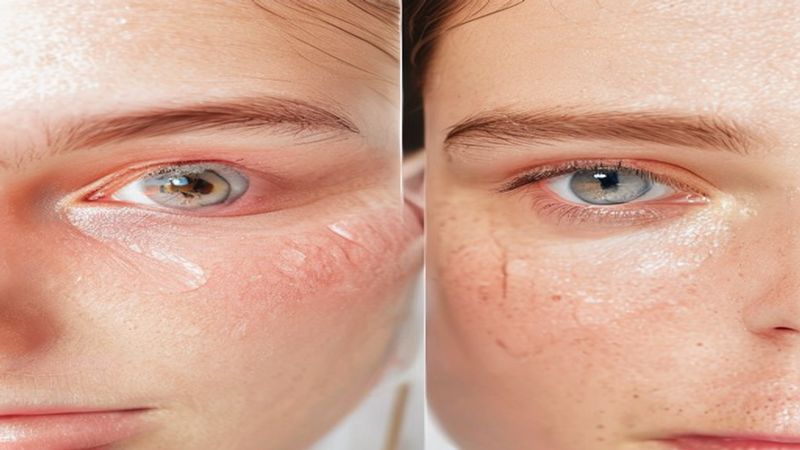
Your skin is red, itchy, and inflamed after using a product. Is it an allergy? Is it irritation? The distinction might seem academic, but it fundamentally changes how you should respond. Allergic reactions require complete, permanent avoidance of the triggering ingredient. Irritant reactions can often be managed by adjusting concentration, frequency, or improving your skin barrier. Getting this wrong — in either direction — costs you time, money, and skin health.
This guide explains the clinical difference between allergic contact dermatitis (ACD) and irritant contact dermatitis (ICD), teaches you how to distinguish them based on observable clues, and shows you what to do about each. For a broader overview of contact dermatitis, see our complete contact dermatitis guide.
The Science: Two Different Mechanisms
Allergic contact dermatitis (ACD) is an immune-mediated reaction classified as Type IV (delayed-type) hypersensitivity. It occurs in two phases:
- Sensitization phase: The first time your skin encounters an allergen, it doesn't react visibly. Instead, the substance penetrates the skin barrier, is picked up by dendritic cells (Langerhans cells), and presented to T-lymphocytes in the lymph nodes. This creates allergen-specific memory T-cells. This process takes 10-14 days and produces no symptoms. You are now "sensitized."
- Elicitation phase: On subsequent exposures, the memory T-cells recognize the allergen within 24-72 hours, triggering a cascade of inflammatory cytokines that produce the visible rash. This is why ACD appears days after exposure, not immediately, and why it can seem to develop "out of nowhere" to a product you've used for months or years.
Irritant contact dermatitis (ICD) involves no immune system participation whatsoever. It is direct chemical or physical damage to the skin barrier, causing cell death, lipid disruption, and inflammatory mediator release. Strong irritants (like concentrated acids) cause immediate visible damage. Mild irritants (like sodium lauryl sulfate) cause cumulative damage that appears after repeated exposure — this "cumulative irritant dermatitis" is easily confused with allergy because it seems to develop gradually.
Side-by-Side Comparison
The following table summarizes the key clinical differences between allergic and irritant contact dermatitis:
| Feature | Allergic Contact Dermatitis | Irritant Contact Dermatitis |
|---|---|---|
| Mechanism | Immune-mediated (Type IV hypersensitivity) | Direct barrier damage (no immune involvement) |
| Onset after first exposure | 10-14 days (sensitization period) | Minutes to hours (acute) or weeks (cumulative) |
| Onset after re-exposure | 24-72 hours (delayed) | Minutes to hours (immediate) |
| Dose-dependence | No — even tiny amounts trigger reaction | Yes — lower dose may be tolerated |
| Rash borders | Poorly defined, extends beyond contact area | Sharply defined, matches contact area exactly |
| Typical symptoms | Intense itch, vesicles, papules, oozing | Burning, stinging, dryness, cracking |
| Affects others | Only sensitized individuals | Anyone with enough exposure |
| Patch test result | Positive (raised, vesicular papules) | Negative or mild non-specific irritation |
| Resolution with avoidance | Must avoid permanently; sensitivity is lifelong | Resolves when exposure stops; may tolerate again after barrier heals |
| Population affected | ~5% per specific allergen (genetically susceptible) | ~100% at sufficient dose/duration |
Common Allergens vs. Common Irritants in Skincare
While there is some overlap, certain ingredients are primarily allergens (triggering immune responses) while others are primarily irritants (causing direct damage).
Ingredients that most commonly cause true allergy:
- Fragrance/Parfum — the #1 cosmetic allergen, responsible for 30-45% of cosmetic ACD cases
- Methylisothiazolinone (MI) — preservative, called an "epidemic" allergen
- Formaldehyde releasers — DMDM hydantoin, imidazolidinyl urea, diazolidinyl urea
- Cocamidopropyl betaine — surfactant in "gentle" cleansers
- PPD (p-phenylenediamine) — permanent hair dye chemical
- Lanolin — natural emollient from wool
- Oxybenzone (benzophenone-3) — chemical sunscreen filter
- Nickel — found in some eye cosmetics
Ingredients that most commonly cause irritation (not allergy):
- Sodium lauryl sulfate (SLS) — harsh surfactant used in cleansers and shampoos
- Retinol and retinoids — cause characteristic "retinoid dermatitis" (peeling, dryness, redness)
- Glycolic acid and other AHAs at high concentrations — chemical exfoliation causes pH-dependent irritation
- Benzoyl peroxide — acne treatment that causes dose-dependent dryness and peeling
- Alcohol denat. (denatured alcohol) — dissolves skin lipids, damaging the barrier
- Menthol and camphor — cause sensory irritation (burning/stinging) via TRPM8 receptor activation
- Propylene glycol — at concentrations above 5%, acts as an irritant (can also cause true allergy in some individuals)
How to Identify Which You Have
While only patch testing provides a definitive answer, you can gather important clues by asking yourself these questions:
Timing Clues
Did the reaction appear immediately (stinging, burning within minutes of application)? That strongly suggests irritation. Did it appear 1-3 days after you started using a product? That pattern is more consistent with allergy. An exception: cumulative irritant dermatitis develops gradually over weeks, mimicking the pattern of allergy.
Dose Clues
Try using less of the product, or diluting the active ingredient. If a thinner layer or lower concentration resolves the reaction, it's likely irritation. If even a tiny amount on a small patch of skin causes the same reaction, it's more likely allergy.
Pattern Clues
Does the rash exactly match where you applied the product, with sharp borders? Irritation. Does the rash spread beyond the application area, with diffuse, poorly defined borders? Allergy. Does the rash appear on areas where you didn't directly apply the product (e.g., eyelids reacting to nail polish allergens transferred by touch)? That is a hallmark of allergic contact dermatitis.
History Clues
Have you used this product or similar products for a long time without problems, and reactions started suddenly? This is classic for new-onset allergy (sensitization can occur after months or years of exposure). Did the reaction start from your very first use? More likely irritation, especially if the product contains known irritants.
For a systematic approach to identifying your specific trigger, see our guide on finding your skin allergy trigger.
Why the Distinction Matters for Treatment
Getting the diagnosis right changes everything about your treatment approach:
If it's an allergy:
- You must identify the specific allergen and avoid it permanently — there is no "building tolerance"
- Read every ingredient list of every product to ensure the allergen is absent
- Be aware of cross-reactions (e.g., allergy to balsam of Peru may cross-react with fragrances, spices, and certain essential oils)
- Sensitivity may increase with future exposures, making reactions more severe
- Acute treatment: topical corticosteroids prescribed by a dermatologist, cool compresses, emollient therapy
If it's irritation:
- You may not need to avoid the ingredient entirely — reducing concentration, frequency, or duration of exposure may be sufficient
- Strengthening your skin barrier (ceramide-rich moisturizers, avoiding over-exfoliation) increases your tolerance threshold
- Buffering techniques work: applying moisturizer before retinol, for example, reduces retinoid irritation without significantly reducing efficacy
- Gradual introduction ("skin training") can build tolerance over time for many irritants
- Once the barrier heals, you may tolerate products that previously caused problems
The Gray Zone: When It's Not Clear-Cut
In practice, allergy and irritation often coexist, complicating the picture. Several scenarios make diagnosis challenging:
Irritation leading to allergy: Chronic irritation damages the skin barrier, allowing allergens to penetrate and sensitize the immune system. A hairdresser might develop irritant dermatitis from frequent hand-washing first, then develop true allergy to hair dye chemicals that penetrate through the damaged skin. This is well-documented in occupational dermatology.
Dual-mechanism ingredients: Some ingredients cause both irritation and allergy. Propylene glycol is irritating above 5% concentration but can also cause true allergic sensitization at lower concentrations. Distinguishing the two requires patch testing at non-irritating concentrations.
Cumulative irritation mimicking allergy: Cumulative irritant dermatitis from mild irritants (like daily SLS exposure from hand soap) develops gradually over weeks to months and can look clinically identical to allergic contact dermatitis. Only patch testing can distinguish them definitively.
When in doubt, see a dermatologist for patch testing. It is a straightforward, well-validated diagnostic procedure that provides definitive answers in most cases.
How to Use This Knowledge Practically
Here is a decision framework when your skin reacts to a product:
- Stop using the product immediately and treat the acute reaction (cool compresses, gentle fragrance-free moisturizer, over-the-counter hydrocortisone 1% for short-term use).
- Assess the timing and pattern using the clues described above. Immediate stinging in the exact application area points to irritation. Delayed rash spreading beyond the application area points to allergy.
- Check the ingredient list for known allergens and irritants. Run it through SkinDetekt's ingredient checker to flag high-risk ingredients.
- If you suspect irritation: Try a lower concentration, less frequent application, or buffer with moisturizer. If tolerated, it was irritation.
- If you suspect allergy: Avoid the product entirely and cross-reference its ingredients with other products that have caused you reactions to find the common ingredient. Consider patch testing.
- Track everything. Log every product, every reaction, and every ingredient. Over time, patterns emerge that no single reaction can reveal.
Distinguishing between allergy and irritation is one of the most important skills for managing reactive skin. With the right approach, you can avoid unnecessary product restrictions (if it's irritation) or ensure complete avoidance of true triggers (if it's allergy). SkinDetekt's ingredient checker helps by flagging both known allergens and known irritants in any product, so you can make informed decisions before a reaction occurs. Upload your product ingredients to get a personalized risk assessment and start building a routine that works for your skin.
Frequently Asked Questions
What is the main difference between skin allergy and skin irritation?
The fundamental difference is immune system involvement. A skin allergy (allergic contact dermatitis) is an immune-mediated response where your T-cells have been sensitized to a specific substance and react every time they encounter it, regardless of dose. Skin irritation (irritant contact dermatitis) is direct chemical or physical damage to the skin barrier without immune involvement — it is dose-dependent, meaning a lower concentration or shorter exposure may not cause a reaction.
Can irritation turn into an allergy?
Yes, chronic irritation can increase the risk of developing a true allergy. When the skin barrier is damaged by irritants, allergens can penetrate more easily and reach the immune cells in the dermis. This is called the "irritation-sensitization pathway." For example, hairdressers who develop irritant dermatitis from frequent hand-washing and chemical exposure are at significantly higher risk of subsequently developing true allergic contact dermatitis to hair dyes or other salon chemicals.
How long does an allergic skin reaction take to appear?
Allergic contact dermatitis typically appears 24-72 hours after exposure, though it can be delayed up to 7 days in some cases, especially with a new (first-time) sensitization. In contrast, irritant reactions usually appear within minutes to hours. This delay is because allergic reactions require time for T-cells to recognize the allergen, proliferate, and mount an inflammatory response — a process called the "elicitation phase" of delayed-type hypersensitivity.
Do I need a patch test to determine if my reaction is allergy or irritation?
Patch testing is the gold standard for definitively distinguishing allergic from irritant reactions. A dermatologist applies suspected allergens to your back under occlusion for 48 hours, then reads the results at 48 and 96 hours. Positive reactions show raised, itchy, vesicular papules indicating true allergy. Patch testing is particularly important because clinical appearance alone cannot reliably distinguish the two — both can cause red, itchy, eczematous rashes that look nearly identical.
Why does it matter whether my reaction is allergy or irritation?
It matters enormously for treatment. If you have an allergy, you must completely avoid the specific ingredient forever — even tiny amounts will cause a reaction once you are sensitized, and reactions may worsen over time. If you have irritation, you may be able to continue using the product at a lower concentration, less frequently, or with better barrier protection. Misidentifying an allergy as irritation leads to continued exposure and worsening reactions. Misidentifying irritation as allergy leads to unnecessary avoidance of safe products.
Find your personal cosmetic triggers
SkinDetekt tracks your products and reactions, then uses AI to identify which ingredients cause YOUR skin reactions.
Download on App StoreRelated Articles
Histamine Intolerance and Skin Reactions: Can Your Skincare Make It Worse?
12 min read
Latex Allergy and Cosmetics: Hidden Sources and Safe Alternatives
10 min read
Nickel Allergy in Makeup and Jewelry: Symptoms, Hidden Sources & Safe Products
11 min read
How to Repair a Damaged Skin Barrier: Signs, Causes & Recovery
12 min read