Mascara & Eyeliner Allergy: Symptoms, Hidden Allergens & Safe Alternatives
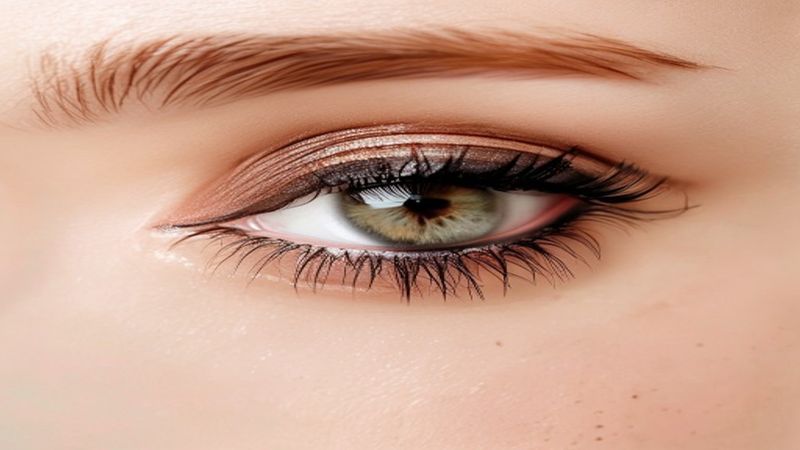
Your eyelid skin is the thinnest and most delicate on your entire body — just 0.5 mm thick compared to 2 mm on most of your face. This makes the eye area uniquely vulnerable to allergic and irritant reactions from cosmetics. Studies show that the eyelids are the most common site of cosmetic contact dermatitis, accounting for approximately 25-30% of all facial contact dermatitis cases.
If you have experienced swollen, itchy, flaky, or red eyelids after using mascara or eyeliner, you are dealing with a very common problem. This guide covers the specific allergens hiding in eye makeup, how to identify your trigger, and how to find products that will not cause reactions. For a broader overview of eye-area reactions, see our eyelid dermatitis guide.
Why the Eyelids Are So Vulnerable
Several factors make eyelid skin disproportionately reactive:
- Extreme thinness: At 0.5 mm, eyelid skin has far fewer cell layers than the rest of the face, allowing allergens to penetrate more easily
- Higher absorption rate: Studies show that the eyelids absorb chemicals at up to 5-10 times the rate of thicker skin areas like the forearms
- Constant motion: Blinking (approximately 15,000-20,000 times per day) creates micro-friction that can break down product particles and increase penetration
- Occlusion from makeup: When the eye is closed, the upper and lower lids create an occluded environment that enhances ingredient absorption
- Transfer from other products: Nail polish, hair products, and facial skincare frequently transfer to the eyelids via touch — a phenomenon called ectopic contact dermatitis
Hidden Allergens in Mascara
Formaldehyde and Formaldehyde Releasers
Mascara formulas need robust preservation because the tube is repeatedly exposed to air and eye bacteria every time you use it. Many mascaras achieve this with formaldehyde-releasing preservatives like DMDM hydantoin, imidazolidinyl urea, and quaternium-15. These slowly release formaldehyde gas, which is both an effective antimicrobial and a well-documented contact allergen. Approximately 2-3% of patch-tested patients react to formaldehyde.
Nickel in Pigments
Nickel is the most common contact allergen worldwide (affecting up to 15% of women), and it can be present as a contaminant in cosmetic pigments — particularly iron oxides used in black and brown mascaras. A 2017 study published in Contact Dermatitis found detectable nickel in nearly all tested eye cosmetic samples. While concentrations are usually low, for highly nickel-sensitive individuals, even trace amounts applied to the thin eyelid skin can trigger reactions.
Colophonium (Rosin)
Colophonium is a natural tree resin used as a film-forming agent in mascaras — it helps the formula adhere to lashes and resist smudging. It is a well-established contact allergen with sensitization rates of 2-8% in patch-tested populations. On ingredient lists, it may appear as colophonium, rosin, abietic acid, or hydrogenated rosin.
Shellac
Shellac is a natural resin secreted by the lac beetle, used in some mascaras for its excellent film-forming and glossing properties. Despite being "natural," shellac is a recognized contact allergen and is included in the standard cosmetic patch test series.
Carbon Black
Carbon black (CI 77266) is the pigment used in most black mascaras. While not a strong sensitizer, nano-sized carbon black particles can cause irritant reactions, particularly in people with pre-existing eye sensitivity. The EU has restricted carbon black in some applications due to potential impurity concerns.
Hidden Allergens in Eyeliner
Dyes and Pigments
Pencil eyeliners primarily use iron oxides (CI 77491, CI 77492, CI 77499), which are generally well-tolerated. However, liquid and gel eyeliners may use synthetic dyes (like D&C colors) that have higher allergenicity. Some vibrant or unusual colors contain azo dyes, which can cross-react with PPD (para-phenylenediamine) — a common hair dye allergen. For more on hair dye allergies and cross-reactivity, see our hair dye allergy guide.
Fragrances in Eye Products
Surprisingly, some eyeliners and mascaras contain fragrance — not for the user to smell, but to mask the chemical odor of raw materials. Any product listing "parfum" or "fragrance" is a potential trigger for the estimated 2-4% of people with fragrance allergy. Always check the ingredient list, even for products you would not expect to be scented.
Isothiazolinone Preservatives
Liquid eyeliners are water-based and require strong preservation. Some contain methylisothiazolinone (MI), the preservative that caused an "epidemic" of contact allergy in the 2010s. While banned from leave-on products in the EU, enforcement of its removal from all eye products has been inconsistent.
Latex in Felt-Tip Eyeliners
Some felt-tip liquid eyeliner pens contain natural rubber latex in the applicator tip or as a formula component. People with latex sensitivity (estimated at 1-6% of the general population, higher in healthcare workers) may experience eyelid reactions from latex-containing eyeliners.
Waterproof Formulas: Higher Risk
Waterproof mascaras and eyeliners carry additional allergy risk for several reasons:
- More complex formulas: Waterproofing requires additional polymers, waxes, and solvents — each one a potential allergen
- Stronger preservation: Waterproof formulas often need more potent preservatives
- Harder removal: Removing waterproof eye makeup requires oil-based or solvent-based removers, adding another set of potential irritants and allergens
- More rubbing: The physical friction of removing stubborn waterproof makeup further irritates delicate eyelid skin
How to Identify Your Eye Makeup Allergen
Step 1: Stop All Eye Makeup
Cease all mascara, eyeliner, eye shadow, and eye primer for a minimum of 2 weeks. Also stop any eye cream or makeup remover. If symptoms improve, an eye product ingredient is confirmed as the cause.
Step 2: Rule Out Transfer Allergens
Remember that eyelid dermatitis is frequently caused by products not directly applied to the eyes. Nail polish is the most common transfer allergen to the eyelids — you touch your eyes far more often than you realize. Also consider hair products (shampoo, conditioner, styling products), facial serums and moisturizers, and even airborne allergens (like a partner's cologne or household cleaning sprays).
Step 3: Reintroduce One Product at a Time
After your 2-week reset, reintroduce one eye product at a time, waiting 5-7 days between each new product. Start with the product you suspect least. Apply it normally and monitor for any eyelid changes. See our elimination method guide for the complete protocol.
Step 4: Professional Patch Testing
For definitive identification, a dermatologist can perform patch testing with a cosmetic series that includes all common eye makeup allergens. You can also bring your own products for direct testing.
Finding Safe Eye Makeup
What to Look For
- Fragrance-free: The single most impactful criterion
- Formaldehyde-free: No DMDM hydantoin, quaternium-15, imidazolidinyl urea, or diazolidinyl urea
- Ophthalmologist-tested: Tested for eye safety (though this does not guarantee hypoallergenicity)
- Iron oxide-based pigments: Mineral pigments (CI 77491, CI 77492, CI 77499) are generally safer than synthetic dyes
- Short ingredient list: Products with fewer than 12-15 ingredients minimize potential triggers
- No rosin/colophonium: Particularly important if patch testing shows rosin allergy
Mascara Safety Tips
- Replace mascara every 3 months — bacterial contamination increases allergen load and infection risk
- Never share mascara — sharing introduces foreign bacteria
- Do not pump the wand — pumping pushes air into the tube, accelerating oxidation and contamination
- Consider tubing mascaras — they form a tube around each lash and remove with warm water, eliminating the need for harsh makeup removers
Eyeliner Alternatives
- Mineral pencil liners: Typically simpler formulas with iron oxide pigments
- Kohl-free pencils: Traditional kohl can contain lead and other heavy metal contaminants
- Skip the waterline: Applying liner to the waterline (inside the lash line) has the highest risk of irritation and allergy because the product directly contacts the conjunctiva
Removing Eye Makeup Safely
Makeup removal is just as important as the makeup itself for allergy-prone eyes:
- Use a fragrance-free, gentle micellar water or cleansing oil — avoid products with strong surfactants
- Soak a cotton pad and hold it against the closed eye for 15-20 seconds before gently wiping. This dissolves makeup without rubbing
- Never scrub or rub the eye area aggressively
- If using a separate eye makeup remover, ensure it is also free of your identified allergens
Your eyes deserve makeup that enhances without harming. Use SkinDetekt's ingredient checker to screen any mascara or eyeliner for known eye-area allergens before purchasing. Upload the ingredient list, and the tool will flag formaldehyde releasers, fragrance, isothiazolinones, and other problematic ingredients instantly. To compare two eye makeup products side by side, use our product comparison tool.
Frequently Asked Questions
What are the symptoms of mascara or eyeliner allergy?
Common symptoms include red, swollen, or puffy eyelids (especially the upper lids), itching or burning sensation around the eyes, flaky or peeling skin on or around the eyelids, watery or irritated eyes, and dark discoloration of the eyelid skin over time. Symptoms typically appear 12-72 hours after application for allergic reactions, or within minutes to hours for irritant reactions. Eyelid skin is the thinnest on the body (0.5mm), making it especially vulnerable to allergens.
Can you suddenly become allergic to mascara you have used for years?
Yes, this is called acquired sensitization. Your immune system can develop a reaction to an ingredient after months or years of repeated exposure. Additionally, manufacturers sometimes change formulations without prominently advertising it. Preservatives can also degrade over time, and contaminated or expired mascara (which should be replaced every 3 months) can harbor bacteria that trigger inflammatory responses.
What ingredients in mascara and eyeliner cause the most allergic reactions?
The top allergens in eye makeup are: fragrances/parfum, formaldehyde-releasing preservatives (quaternium-15, DMDM hydantoin), nickel and other heavy metals in pigments (especially in darker shades), colophonium (rosin) used as a film-forming agent, shellac (a natural resin that can cause contact allergy), and carbon black nanoparticles in some black pigments. Waterproof formulas tend to be more allergenic because they require stronger solvents and film formers for water resistance.
Is waterproof mascara worse for sensitive eyes?
Generally, yes. Waterproof mascaras contain additional film-forming polymers, waxes, and solvents to create water-resistant films. These extra ingredients increase the number of potential allergens. The removal process is also harder — requiring oil-based or solvent-based removers that introduce yet more potential irritants. Additionally, waterproof formulas tend to contain more formaldehyde-releasing preservatives because the formula needs stronger preservation.
What mascara and eyeliner is safe for allergic eyes?
Look for products that are fragrance-free, formaldehyde-free, and have been ophthalmologist-tested. Mineral-based eyeliners with iron oxide pigments (instead of dye-based pigments) tend to be less allergenic. Avoid waterproof formulas unless necessary. Products with fewer than 15 ingredients reduce the probability of containing an allergen. Always do a patch test on your inner forearm for 5 days before using any new eye product near your eyes.
Find your personal cosmetic triggers
SkinDetekt tracks your products and reactions, then uses AI to identify which ingredients cause YOUR skin reactions.
Download on App Store