Shampoo Allergy: Symptoms, Causes, and What to Switch To
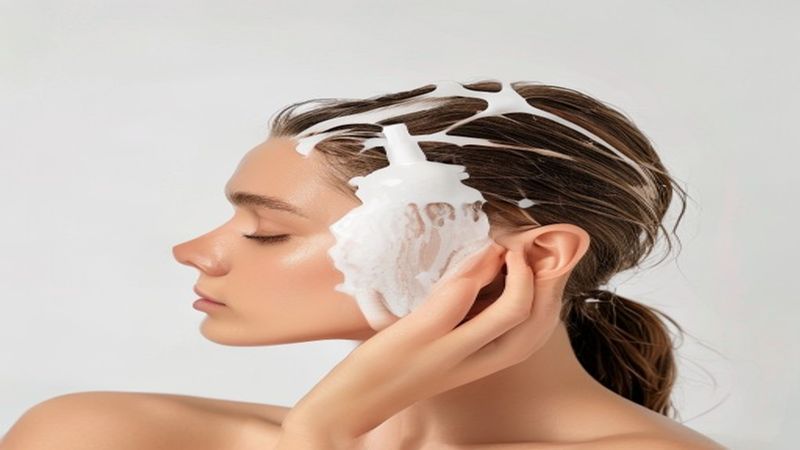
Your scalp itches, flakes, and burns after washing — but dandruff shampoo only makes it worse. Your eyelids are red and swollen, and you cannot figure out why. If this sounds familiar, you may be dealing with a shampoo allergy rather than simple dandruff or dry scalp. Shampoo allergies are underdiagnosed because their symptoms mimic other conditions, and because the reactions often appear on the face and neck rather than the scalp itself, leading both patients and doctors to overlook hair products as the cause.
Contact dermatitis from hair care products accounts for an estimated 5-10% of all cosmetic contact dermatitis cases seen in dermatology clinics. This guide covers the specific allergens responsible, how to distinguish allergy from irritation, and evidence-based options for switching to safer alternatives.
Recognizing Shampoo Allergy Symptoms
Shampoo allergy — specifically, allergic contact dermatitis from shampoo ingredients — can present in several ways. The location and pattern of symptoms are often the first clues:
- Scalp: Persistent itching, redness, and scaling along the hairline, crown, and behind the ears. Unlike seborrheic dermatitis (true dandruff), allergic scalp dermatitis typically responds poorly to antifungal shampoos and may worsen with each wash.
- Face and eyelids: This is the most commonly missed presentation. Shampoo allergens transfer to the face during rinsing and from hair contact throughout the day. Eyelid dermatitis (red, puffy, flaky eyelids) is a classic sign of hair product allergy. A 2019 study in the Journal of the American Academy of Dermatology found that hair care products were the cause of eyelid dermatitis in approximately 22% of patch-tested patients.
- Neck and upper back: These areas are directly exposed during rinsing. A V-shaped rash on the upper back ("shampoo drip pattern") is a telltale sign.
- Ears: Redness, cracking, and scaling in and around the ears, especially behind the earlobes where shampoo collects.
- Hands: If you are sensitized, handling the shampoo bottle and lathering can trigger hand eczema.
Timing matters: Allergic reactions typically appear 12-72 hours after exposure, not immediately during washing. If you wash your hair in the evening and wake up with itchy eyelids the next morning, consider your shampoo as a potential cause.
The 6 Most Common Shampoo Allergens
Clinical patch testing data and published research consistently identify these six ingredient categories as the leading causes of shampoo allergy:
1. Fragrances (Parfum)
Fragrance is the number-one cosmetic allergen overall, and shampoo is one of the most common delivery vehicles. Shampoo fragrances contain dozens of individual aromatic compounds, any of which can cause sensitization. Even "natural" scented shampoos using essential oils contain potent fragrance allergens like linalool and limonene. Look for products explicitly labeled "fragrance-free" — not "unscented," which may contain masking fragrances.
2. Methylisothiazolinone (MI) and Methylchloroisothiazolinone (MCI)
Methylisothiazolinone and methylchloroisothiazolinone are preservatives that caused an allergy epidemic between 2010-2015. While MI has been banned from leave-on products in the EU, it is still permitted in rinse-off products like shampoo at concentrations up to 15 ppm. The MCI/MI combination (trade name Kathon CG) remains one of the most common preservatives in shampoos worldwide. MI was named the American Contact Dermatitis Society's Allergen of the Year in 2013.
3. Cocamidopropyl Betaine (CAPB)
Cocamidopropyl betaine is a surfactant found in virtually every "gentle" or "sulfate-free" shampoo. It was named Allergen of the Year in 2004 by the American Contact Dermatitis Society. The irony is that people who switch to "gentle" shampoos to avoid sulfate irritation often end up using more CAPB, potentially triggering a new allergic problem. The allergy is thought to be caused by manufacturing impurities (aminoamide and dimethylaminopropylamine) rather than the CAPB molecule itself.
4. Sodium Lauryl Sulfate (SLS) and Sodium Laureth Sulfate (SLES)
Sodium lauryl sulfate is primarily an irritant rather than a true allergen — it strips the skin's lipid barrier, causing dryness, itching, and inflammation through a non-immune mechanism. However, the clinical distinction matters less when your scalp is inflamed. SLES (sodium laureth sulfate) is a milder version that undergoes ethoxylation to reduce irritation, but it can still cause problems for sensitive individuals. Both are the primary foaming agents in most conventional shampoos.
5. DMDM Hydantoin and Other Formaldehyde Releasers
DMDM hydantoin is a formaldehyde-releasing preservative that gained public attention after a 2021 class-action lawsuit against a major shampoo manufacturer. It works by slowly releasing small amounts of formaldehyde to prevent microbial growth. Other formaldehyde releasers found in shampoos include imidazolidinyl urea and diazolidinyl urea. Formaldehyde allergy affects approximately 2-3% of patch-tested patients, and if you react to one formaldehyde releaser, you will likely react to all of them.
6. Propylene Glycol
Propylene glycol is a humectant and solvent used in shampoos to help distribute other ingredients evenly and improve texture. At higher concentrations it causes irritant reactions in nearly everyone, but at lower concentrations it can trigger true allergic contact dermatitis in sensitized individuals (0.8-3.5% positivity rate in patch testing studies). It appears under INCI names including propylene glycol, 1,2-propanediol, and sometimes as part of botanical extract solvents listed parenthetically.
Why Shampoo Allergies Are So Often Misdiagnosed
Shampoo allergy is frequently misdiagnosed as one of these conditions:
- Seborrheic dermatitis (dandruff): Both cause scalp flaking and itching. The key difference is that seborrheic dermatitis responds to antifungal ingredients (ketoconazole, zinc pyrithione) while allergic dermatitis does not — and may worsen, since medicated shampoos contain their own potential allergens.
- Psoriasis: Scalp psoriasis produces thick, silvery scales and well-demarcated plaques, whereas allergic dermatitis tends to produce thinner, more diffuse scaling with prominent itching and redness.
- Atopic dermatitis (eczema): People with existing atopic dermatitis are more susceptible to contact allergies, and the two conditions can overlap. A new worsening of eczema, especially if localized to the scalp, face, or hairline, should prompt consideration of a product allergy.
- Dry scalp: Simple dryness causes fine flaking without significant redness or inflammation. Allergic dermatitis produces an inflammatory response with erythema, edema, and sometimes vesicles.
The diagnostic clue: If your symptoms are worst along the hairline, behind the ears, on the nape of the neck, or on the eyelids — and they worsened gradually over weeks to months — think contact allergy rather than dandruff.
Getting a Diagnosis: When to See a Dermatologist
If switching to a fragrance-free, preservative-minimal shampoo does not resolve your symptoms within 4 weeks, formal patch testing by a dermatologist is the next step. Patch testing involves applying small amounts of standardized allergens to your back under adhesive patches for 48 hours, then reading the results at 48 and 96 hours.
The standard patch test series includes the most common cosmetic allergens: fragrance mix I and II, MI, MCI/MI, formaldehyde, CAPB, and many others. Extended series can test 80-100+ substances. If you suspect a specific shampoo, bring it to your appointment — your dermatologist can also test the product itself ("as is" testing) and its individual ingredients.
A 2021 systematic review in Contact Dermatitis found that preservatives and fragrances together accounted for over 60% of positive patch test reactions in patients with scalp dermatitis, reinforcing the importance of these two allergen categories.
Safe Alternatives: What to Switch To
Once you know your specific allergen(s), selecting a safe shampoo becomes straightforward — avoid products containing those ingredients. However, if you are still investigating or want a low-risk starting point, these strategies are evidence-based:
- Purpose-designed allergy-safe shampoos: Vanicream Free & Clear Shampoo is specifically formulated without the top 80+ contact allergens. It is free of fragrance, dyes, parabens, lanolin, CAPB, MI/MCI, formaldehyde releasers, and SLS.
- True fragrance-free options: Verify the ingredient list for absence of "parfum," "fragrance," essential oils, and botanical extracts that contain fragrance compounds.
- Preservative-safe choices: Shampoos preserved with phenoxyethanol and sodium benzoate are generally well-tolerated (these have lower allergenicity rates than MI, MCI, or formaldehyde releasers).
- Surfactant alternatives: If CAPB is your allergen, look for shampoos using sodium cocoyl isethionate or decyl glucoside as primary surfactants instead. If SLS is the problem, SLES or amino acid-based surfactants (sodium lauroyl sarcosinate) are gentler options — though be cautious of CAPB in the replacement product.
Important reminder: "Sulfate-free," "natural," "organic," and "hypoallergenic" are marketing terms with no standardized definitions. None of them guarantee the absence of your specific allergen. Always check the full ingredient list.
Preventing Future Reactions
Once you have identified your shampoo allergen and found a safe product, take these steps to stay reaction-free:
- Read ingredient lists on every new purchase. Reformulations happen without warning — even your "safe" shampoo may change its preservative system.
- Be cautious with hotel and travel-size products. These are common triggers for flare-ups because people use unfamiliar products without checking ingredients.
- Rinse thoroughly. Even with a safe shampoo, residue left on the scalp, face, and neck increases the risk of irritation. Rinse for at least 30 seconds after lathering.
- Warn your hairdresser. Salon products often contain high concentrations of fragrances, preservatives, and surfactants. Bring your own shampoo to appointments or ask the salon to check their product ingredients.
- Check conditioners and styling products too. If your shampoo was the trigger, the same allergen may be present in other hair products you use.
Screen Your Products with SkinDetekt
Finding the right shampoo should not require a chemistry degree. SkinDetekt's ingredient checker lets you paste or scan any shampoo's ingredient list and instantly see which known allergens it contains — including fragrances, preservatives, surfactants, and formaldehyde releasers. If you already know your personal trigger allergens from patch testing, the app will flag any product containing them before you buy. Stop playing ingredient roulette and start making informed choices about what touches your scalp and skin.
Frequently Asked Questions
What are the symptoms of a shampoo allergy on the scalp?
Shampoo allergy symptoms on the scalp include persistent itching that does not respond to dandruff shampoos, redness and inflammation along the hairline and behind the ears, flaking or scaling that resembles dandruff but is actually eczema (allergic contact dermatitis), small blisters or weeping areas in severe cases, and a burning or stinging sensation during or after washing. Crucially, shampoo allergies often cause symptoms beyond the scalp — on the face (especially eyelids and forehead), neck, upper back, and ears — because shampoo rinses over these areas and residue transfers from hair.
Can shampoo cause a rash on your face?
Yes, this is extremely common and frequently misdiagnosed. Shampoo allergens cause facial dermatitis in up to 30-40% of shampoo allergy cases, according to dermatology literature. The most commonly affected areas are the eyelids, forehead, temples, and periauricular skin (around the ears). The mechanism is both direct contact during washing and indirect transfer from hair touching the face throughout the day. Many patients with unexplained eyelid dermatitis or forehead eczema are ultimately diagnosed with a shampoo or conditioner allergy.
What is the difference between shampoo allergy and irritation from sulfates?
Sulfate irritation (from SLS/SLES) is an irritant reaction caused by the surfactant stripping the skin barrier. It occurs in a dose-dependent manner, affects almost everyone at high enough concentrations, and improves immediately when you switch to a milder surfactant. True shampoo allergy is an immune-mediated response (allergic contact dermatitis) to a specific ingredient — it requires prior sensitization, can worsen over time with repeated exposure, often has a delayed onset of 24-72 hours, and will only resolve when the specific allergen is completely avoided. Both can coexist in the same person.
Are sulfate-free shampoos safe for people with shampoo allergies?
Sulfate-free shampoos eliminate SLS and SLES, which helps if sulfates are your trigger or if you have scalp irritation. However, sulfate-free does not mean allergen-free. Many sulfate-free shampoos contain cocamidopropyl betaine (CAPB), which is itself a significant allergen (named Allergen of the Year in 2004). They may also contain fragrances, methylisothiazolinone, or other preservative allergens. Always check the full ingredient list rather than relying on "sulfate-free" marketing claims.
How do I find a truly hypoallergenic shampoo?
The term "hypoallergenic" is not regulated and has no legal definition — any brand can use it. To find a genuinely low-allergen shampoo, look for products specifically designed for contact allergy patients, such as Vanicream Free & Clear Shampoo, which is formulated without the top 80+ contact allergens. Check the ingredient list for absence of: fragrance/parfum, methylisothiazolinone, methylchloroisothiazolinone, cocamidopropyl betaine, formaldehyde releasers, and propylene glycol. Use SkinDetekt's ingredient checker to verify any product before purchasing.
Find your personal cosmetic triggers
SkinDetekt tracks your products and reactions, then uses AI to identify which ingredients cause YOUR skin reactions.
Download on App StoreRelated Articles
Histamine Intolerance and Skin Reactions: Can Your Skincare Make It Worse?
12 min read
Latex Allergy and Cosmetics: Hidden Sources and Safe Alternatives
10 min read
Nickel Allergy in Makeup and Jewelry: Symptoms, Hidden Sources & Safe Products
11 min read
How to Repair a Damaged Skin Barrier: Signs, Causes & Recovery
12 min read